Information
“I like late in the day. I like the day to night transfer, I like the desaturation. It’s a high-speed eternity.”
-Catharine MacTavish
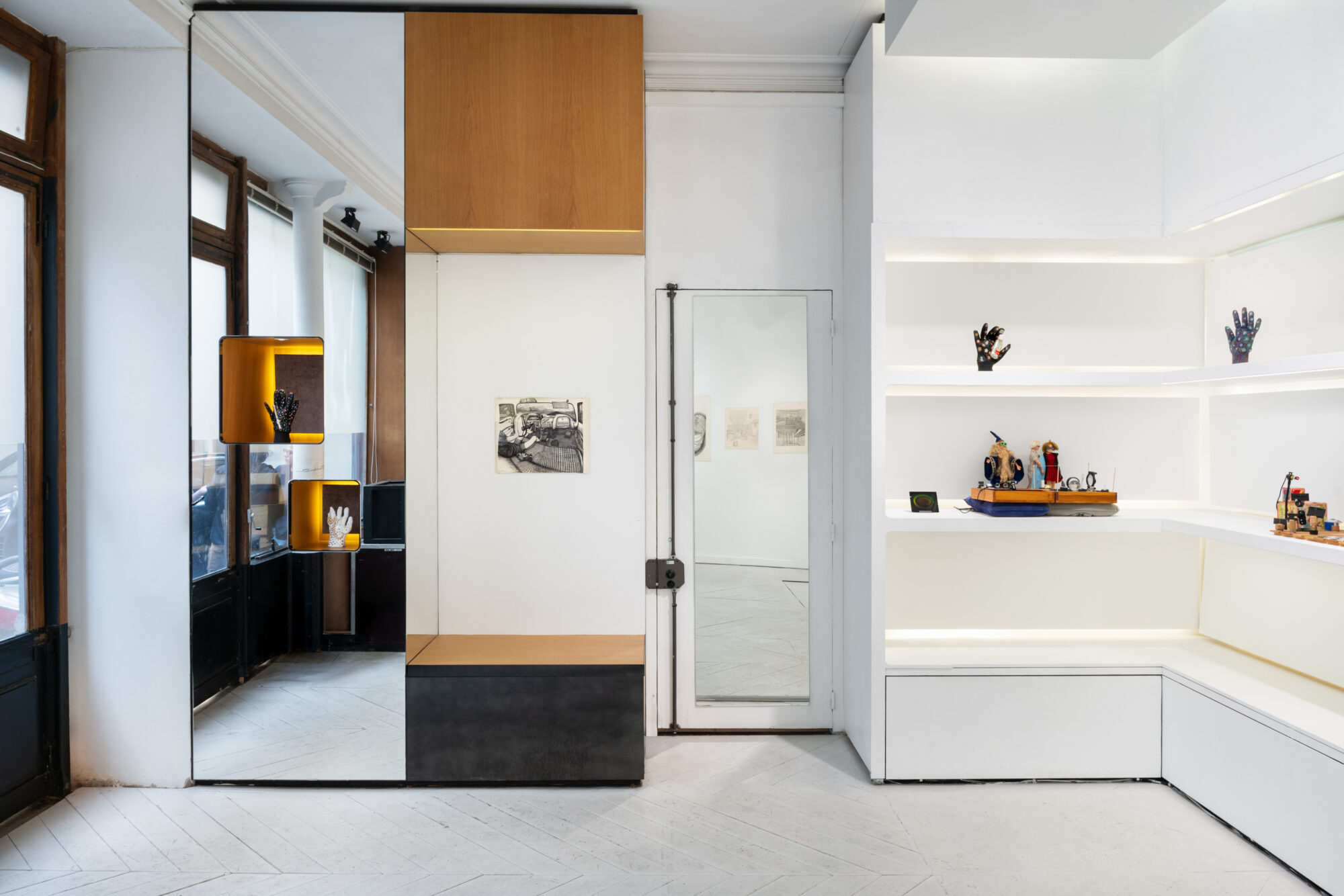
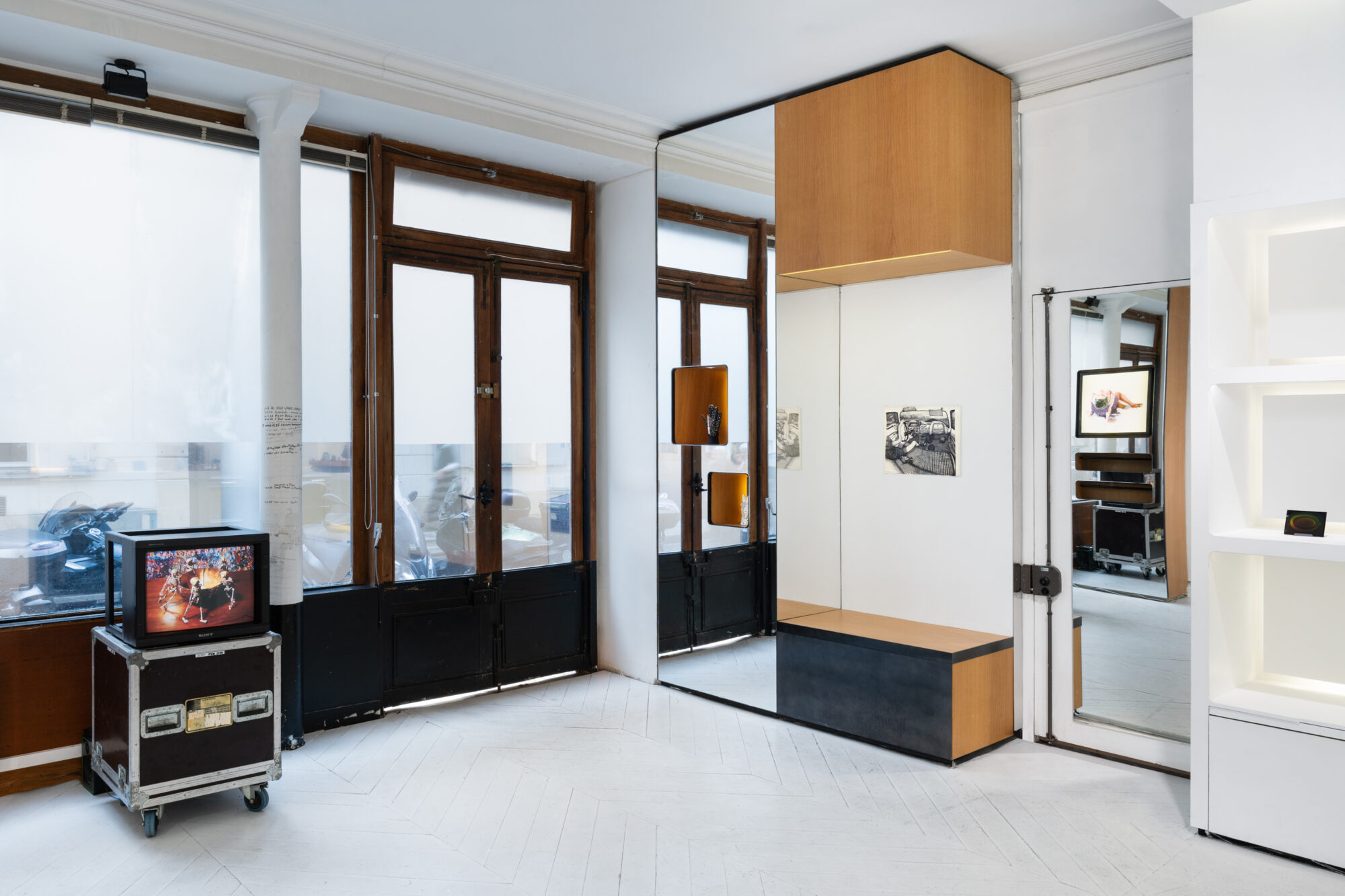
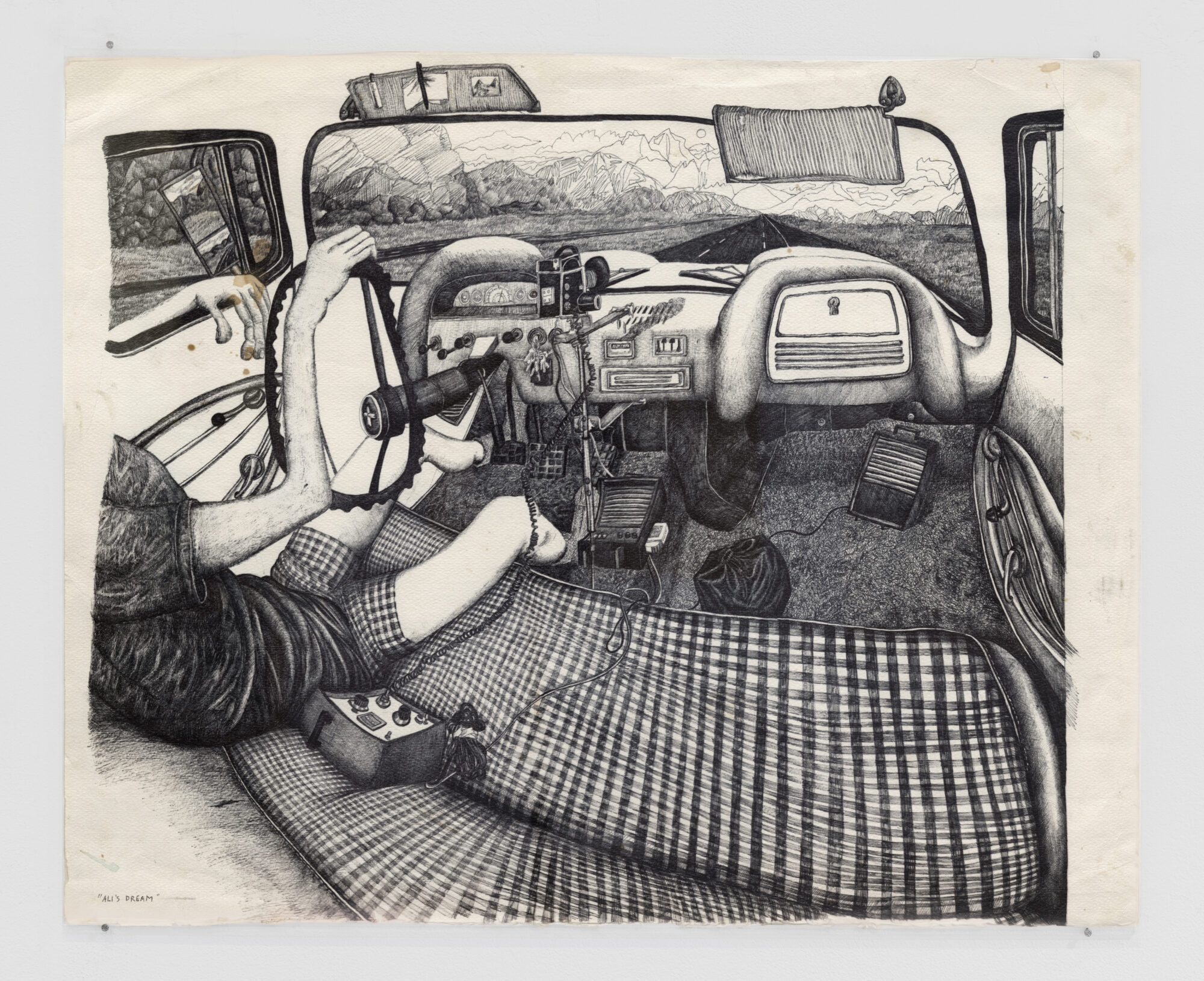
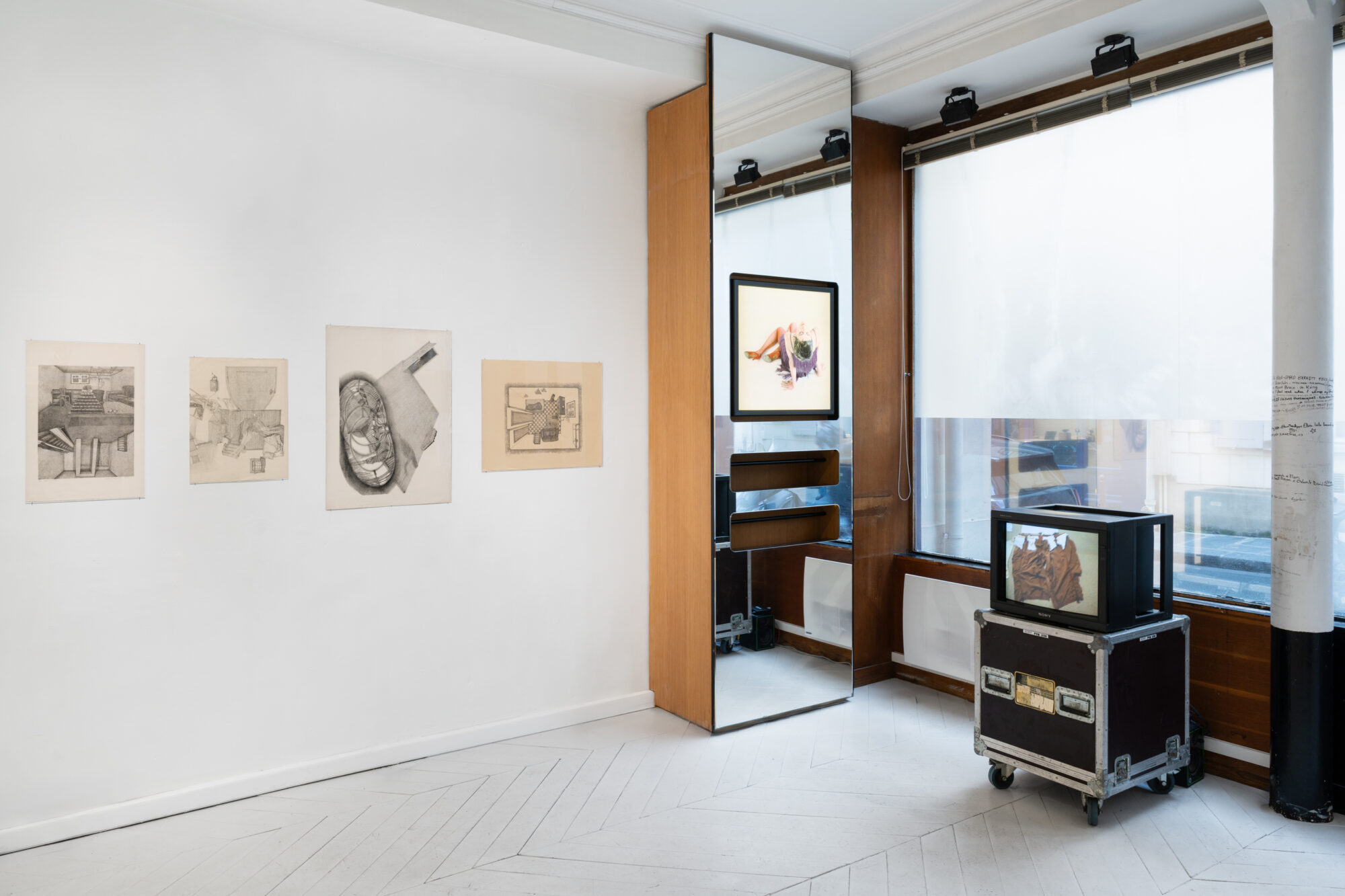
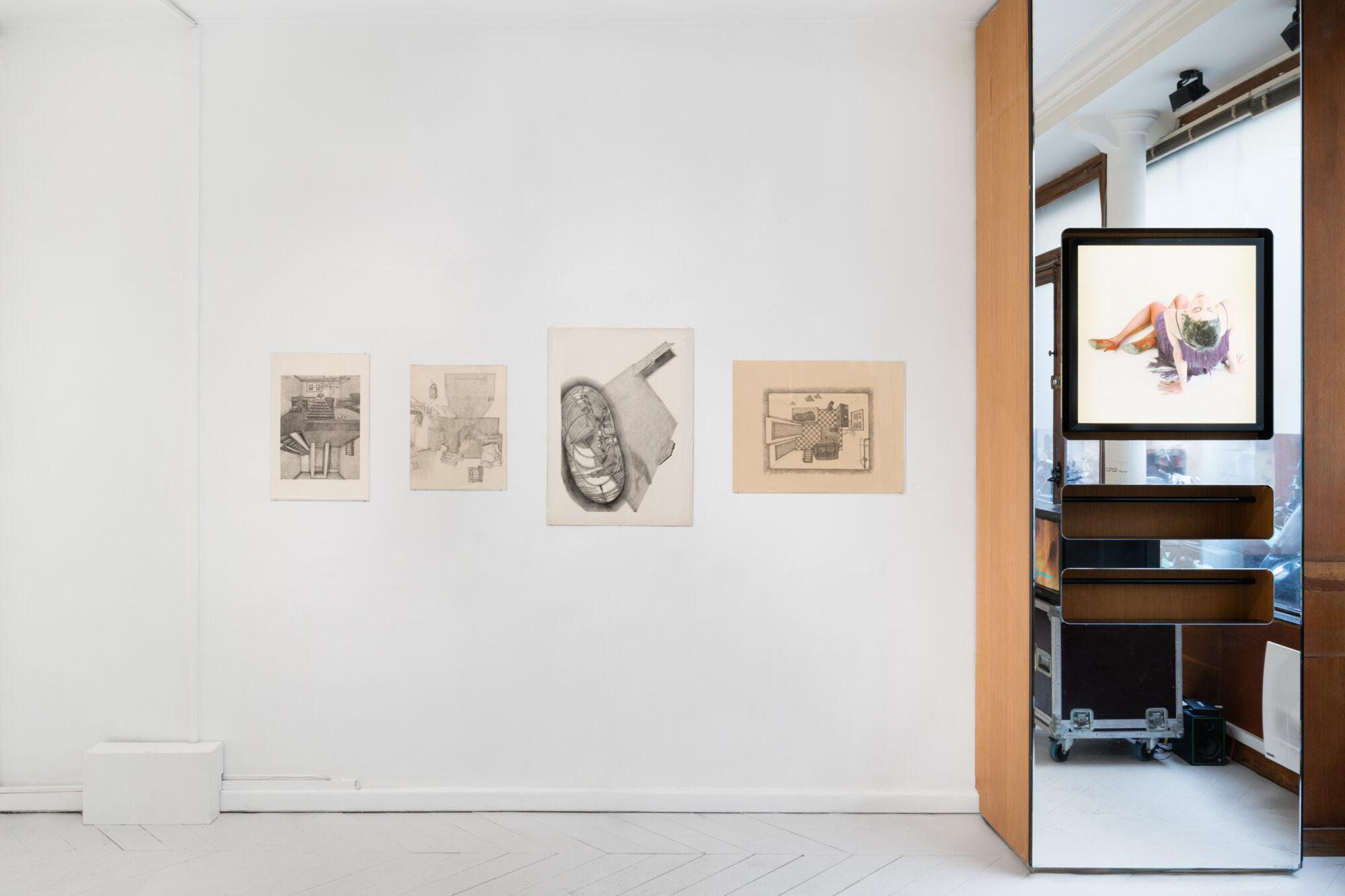
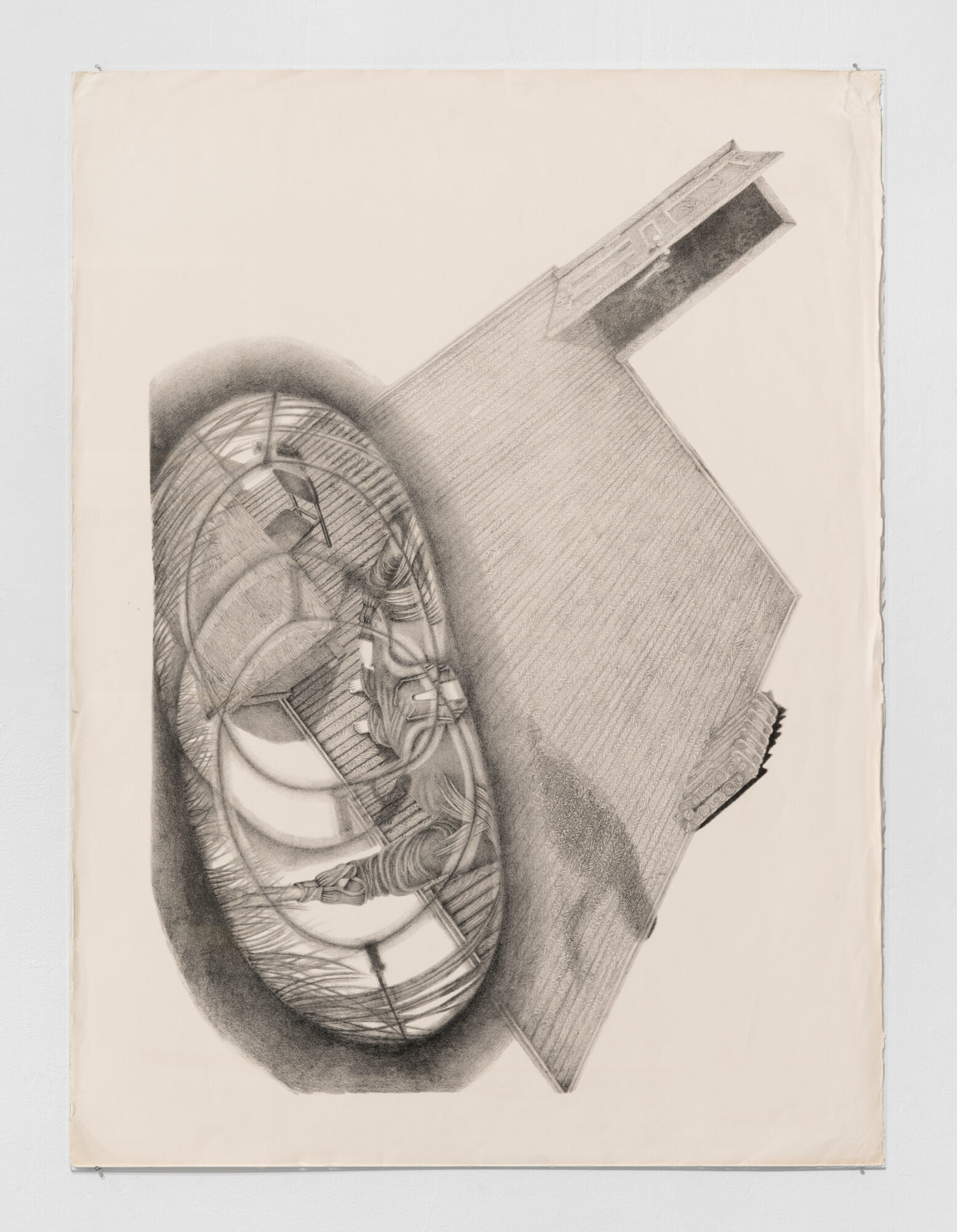
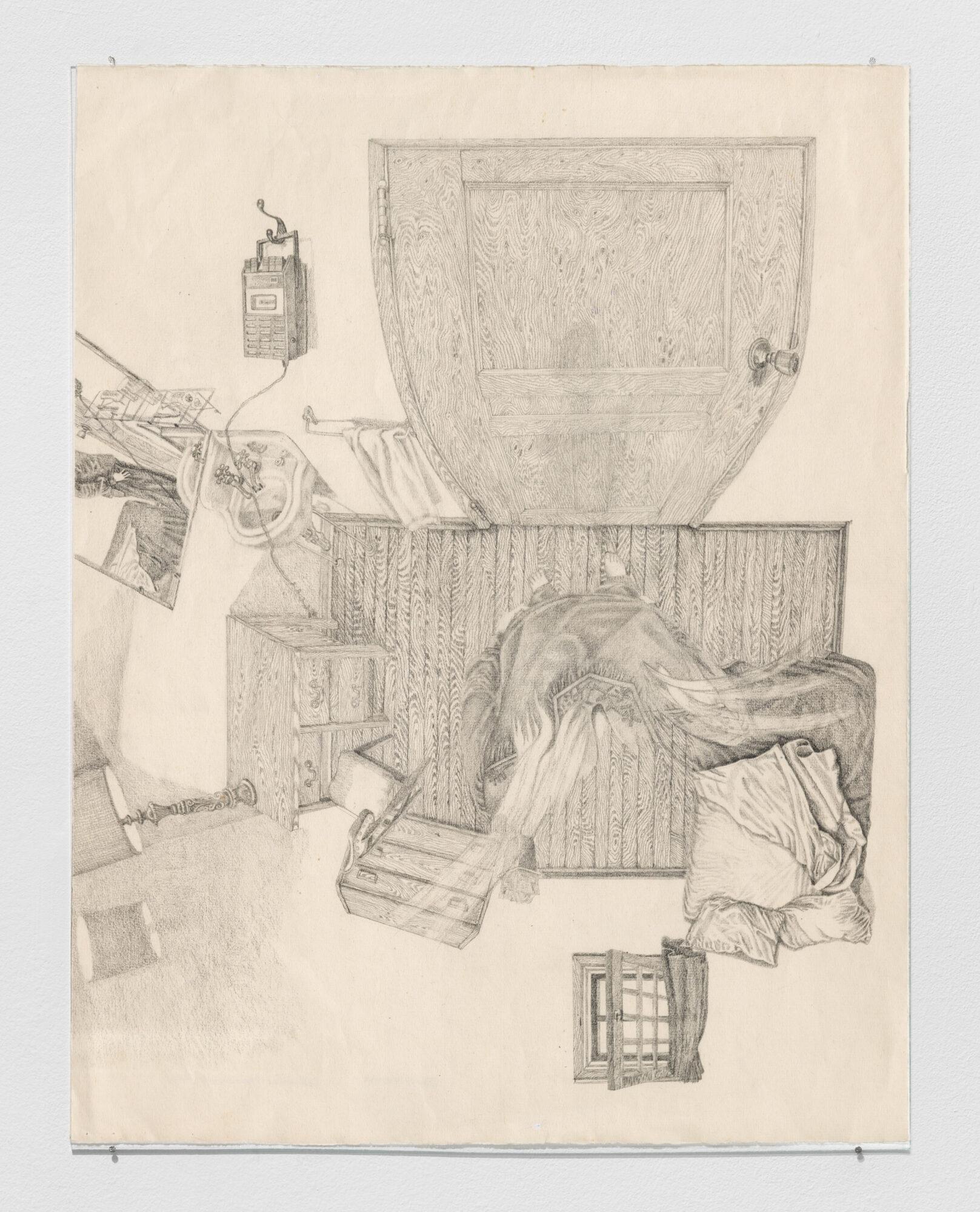
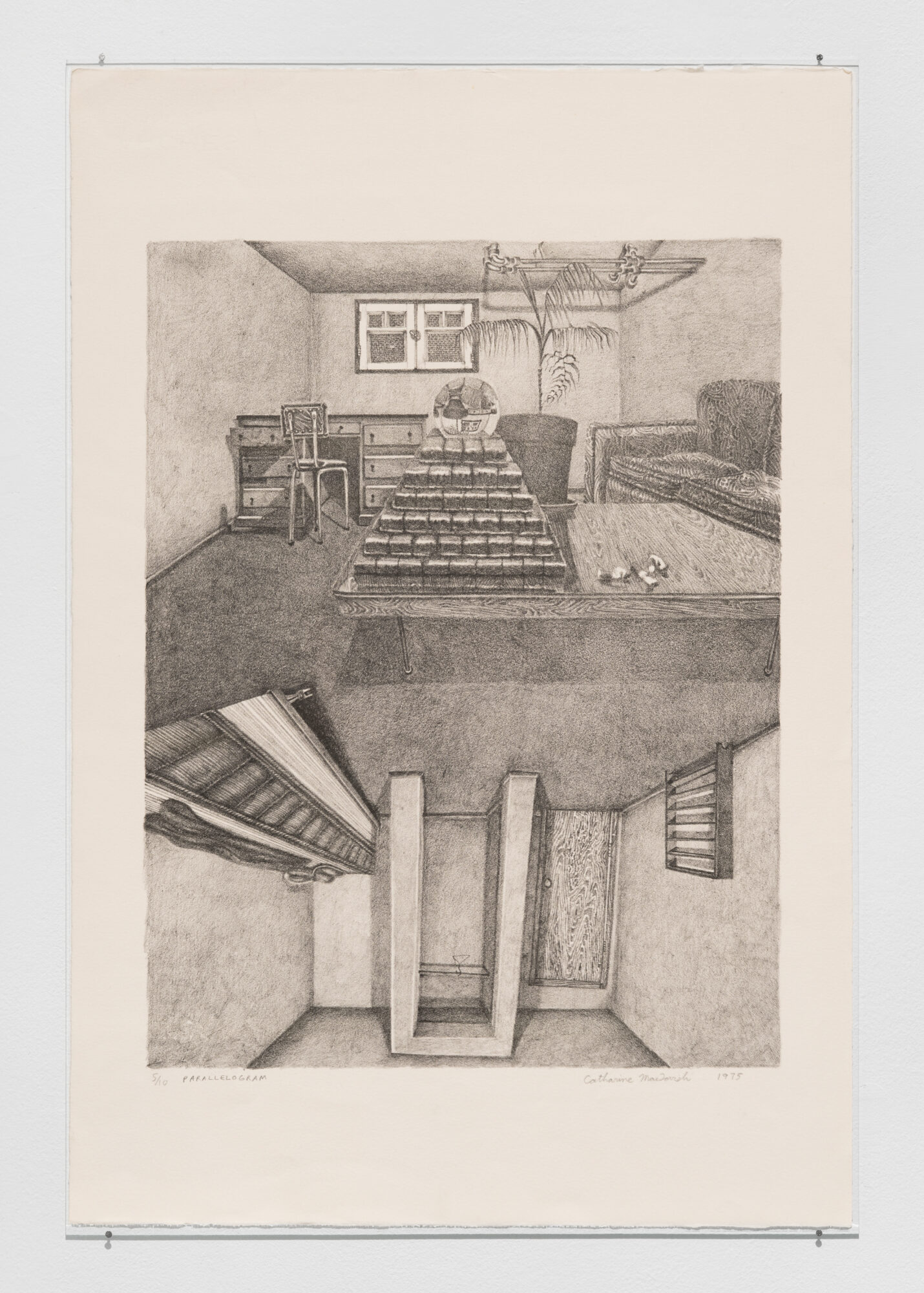
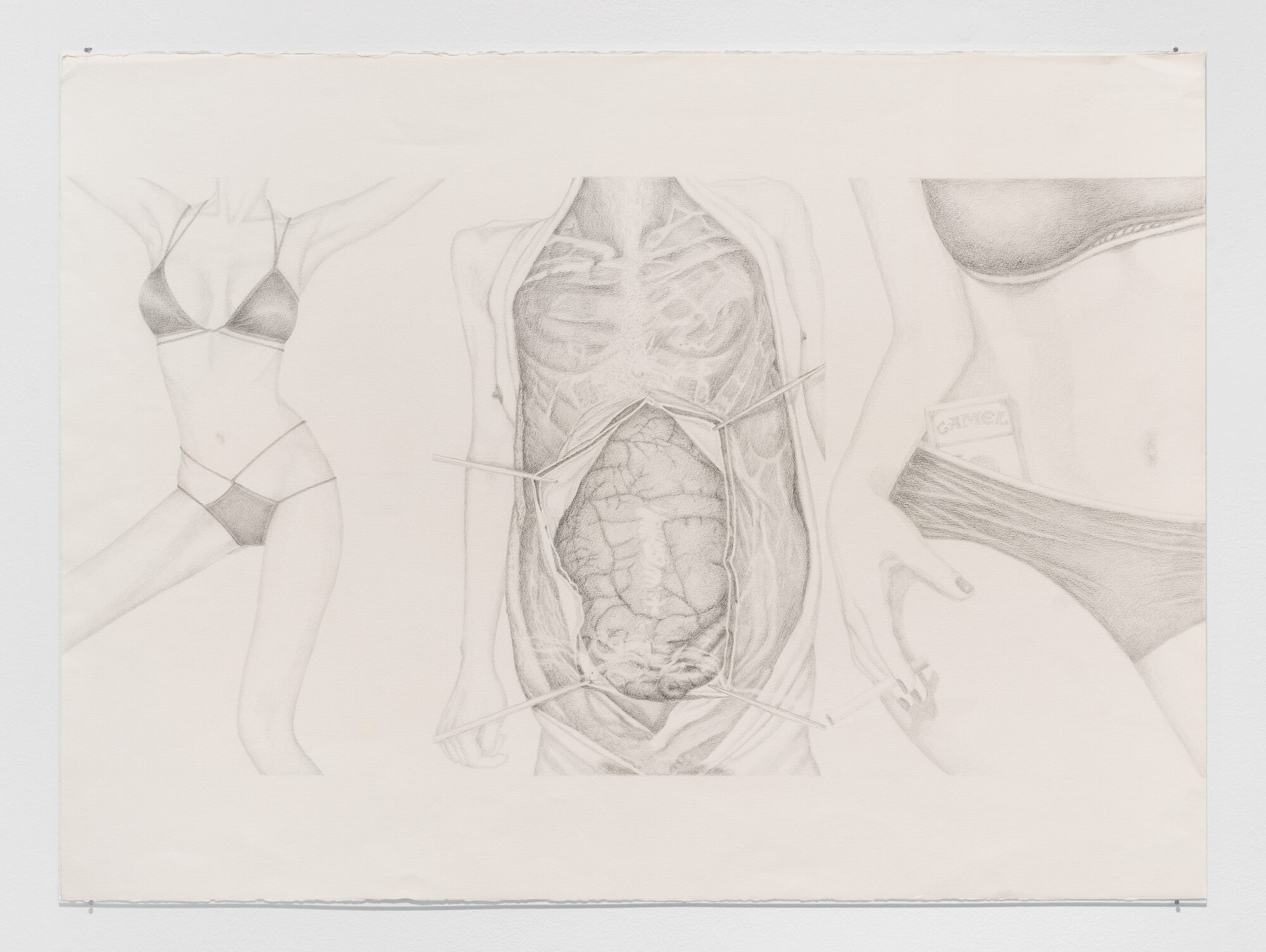
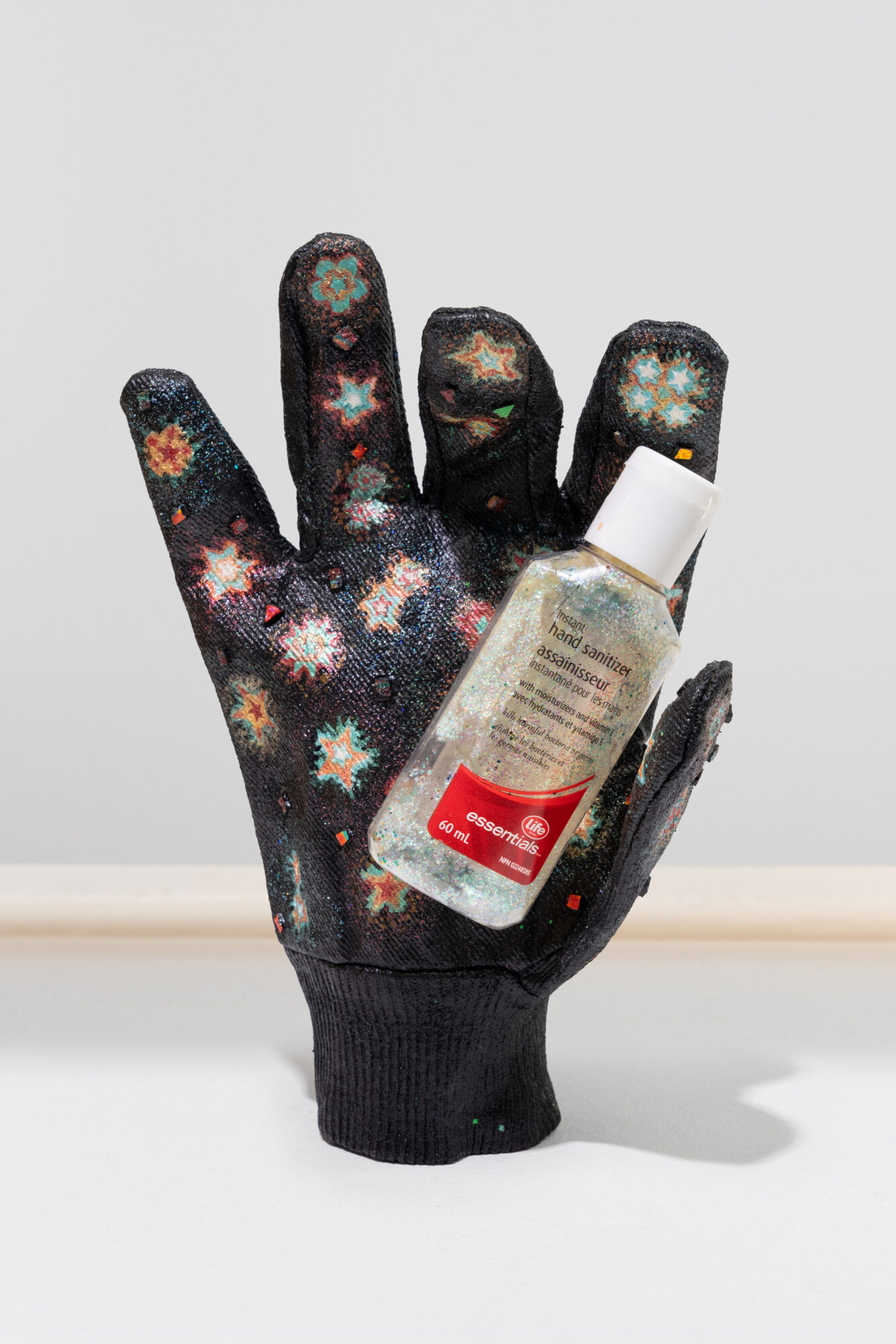
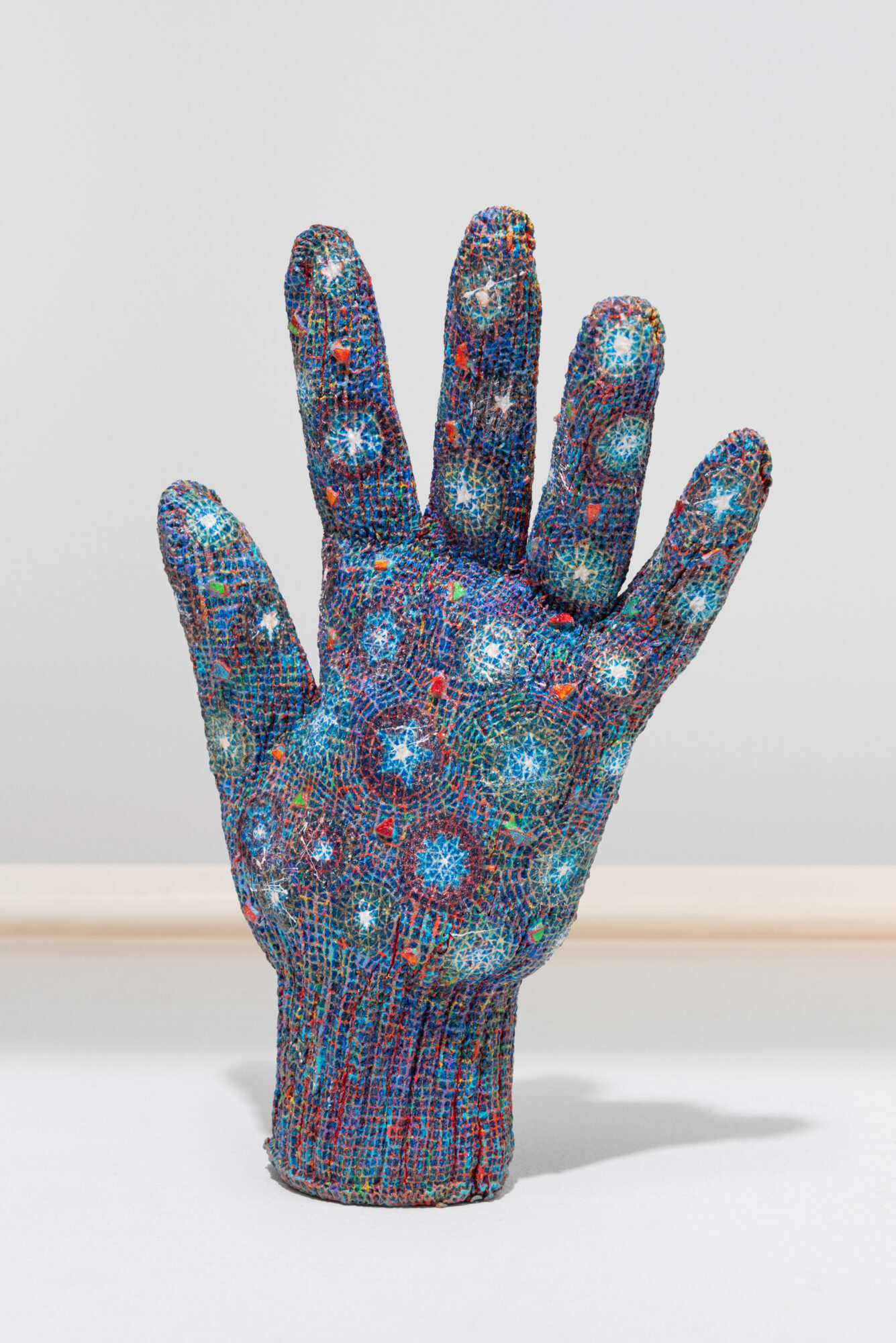
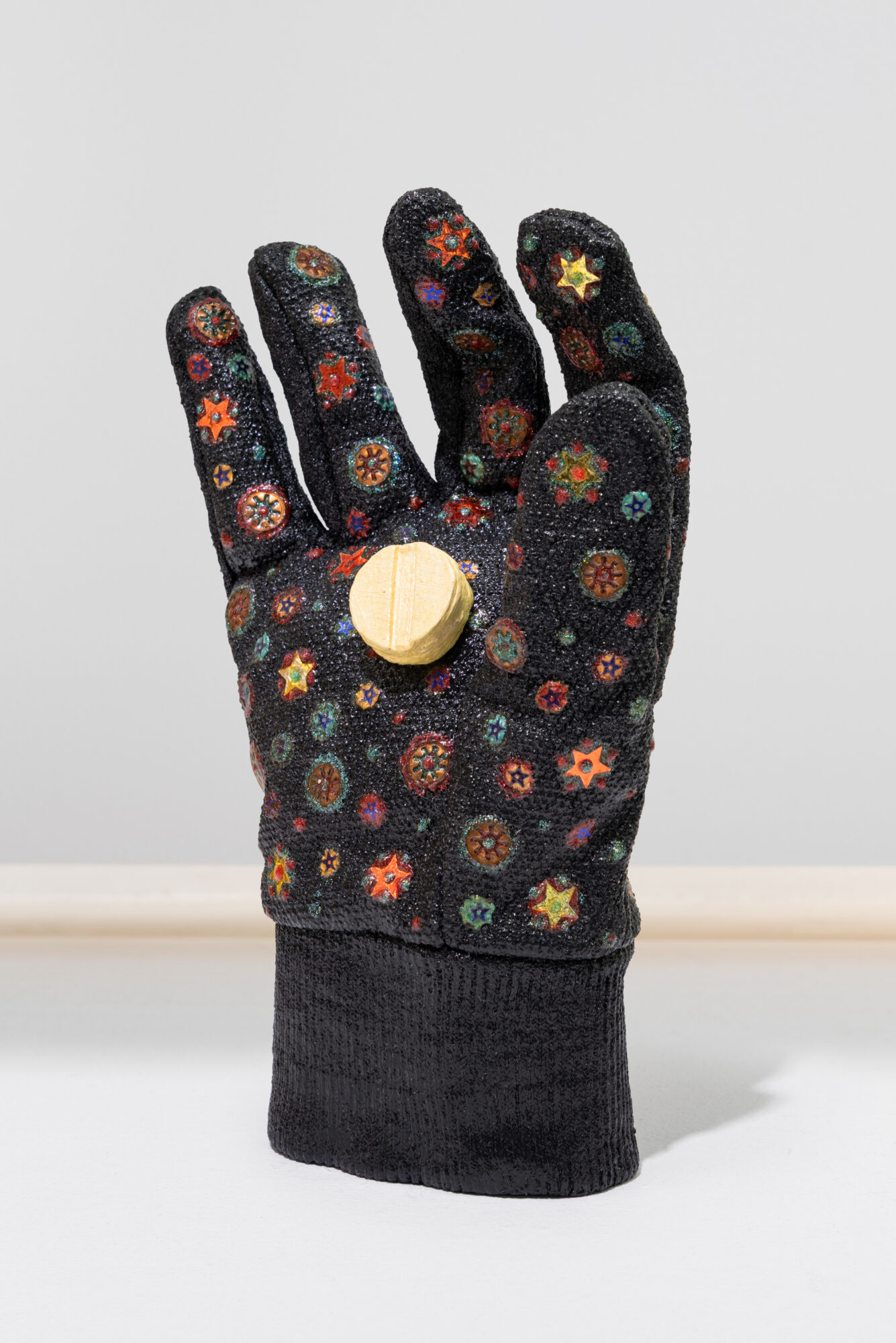
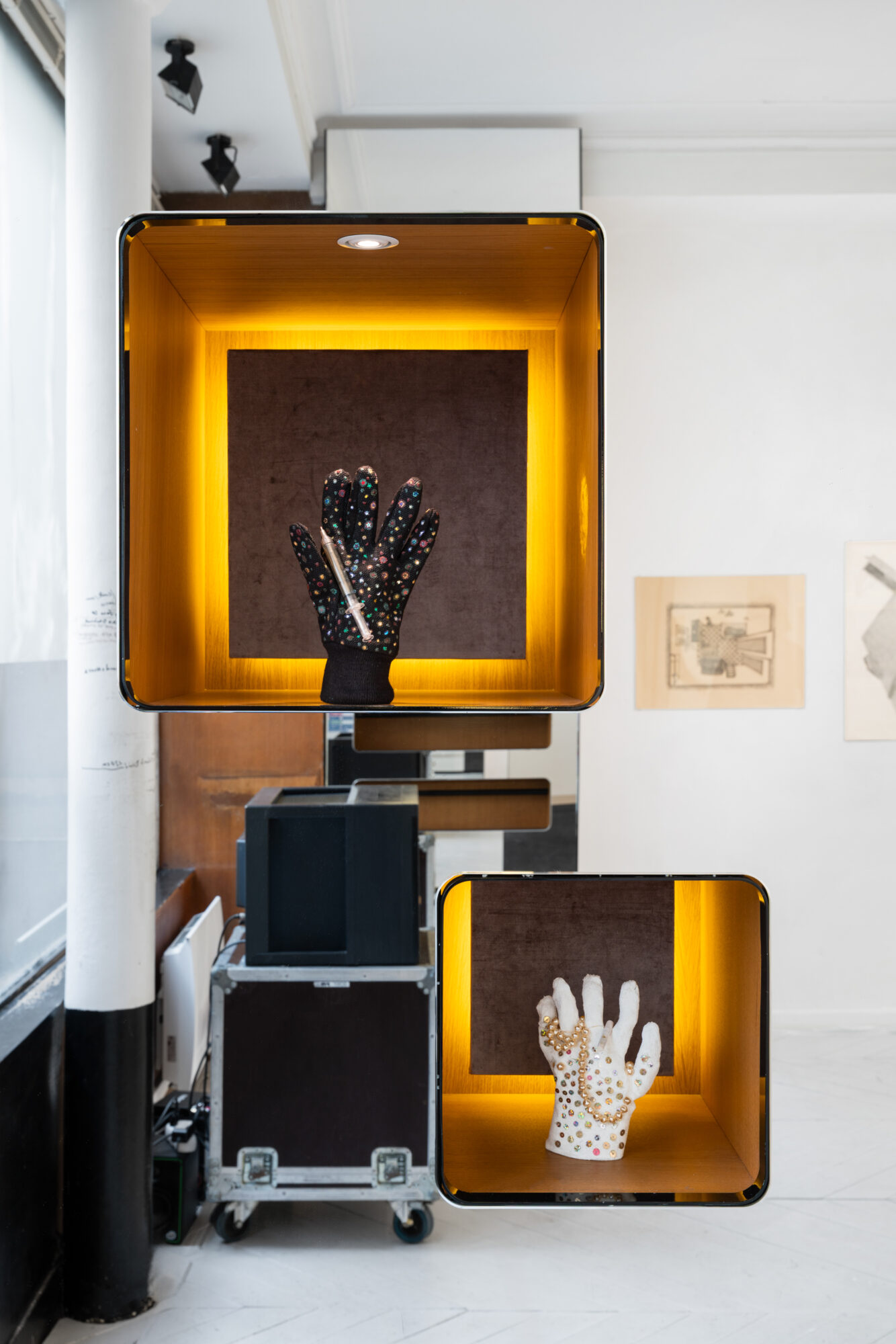
Spanning six decades (1974–2026), the drawings, prints, videos, holograms, three-dimensional paintings and dollhouses in High-Speed Eternity represent a small sample of Canadian artist Catharine MacTavish’s multifaceted practice. Brought together for the first time, these works mirror the artist’s kaleidoscopic life trajectory while highlighting her ongoing investigations into the phenomena of vision. Starting from the skin and clothing that delineates her body, MacTavish’s work moves through different methods of self-dissolution by way of philosophy, miniatures and holography — constantly shifting both scale and perspective in an attempt to dissolve into vision and “become seeing seeing seeing!”
Despite finding some success with her drawings and paintings in the mid 1970s-80s, MacTavish hasn’t shown her work since 2003, and never outside of Canada. Personal and medical turmoil, along with challenging economic circumstances and systemic under-representation of women artists, hampered her opportunities. For fifteen years she lived as an ordained Buddhist nun while working in early childhood education. Yet throughout that time, and without an audience, MacTavish’s experimentation hasn’t stopped.
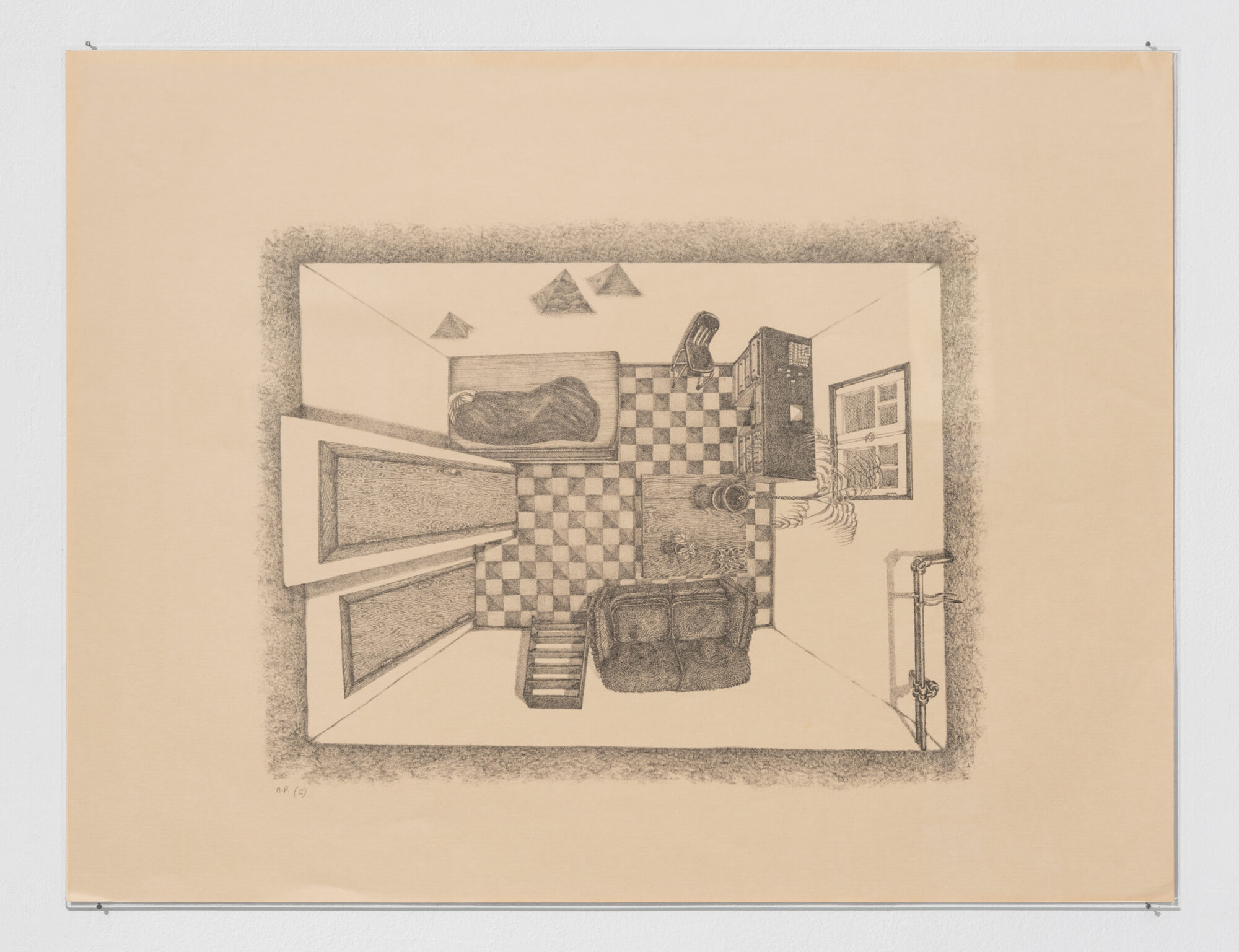
At the heart of the exhibition, the series Self Centred (1974-79) coincides with MacTavish’s self-described ‘formal awakening’ from which all of her later work stems. These large format graphite drawings and stone lithographs begin as simple hand-eye renderings, which in rapid succession turn to a fly’s-eye view that depicts the dissolving body of the artist enclosed inside distorted rooms. Self Centred is both a technical and philosophical inquiry, exploring the way peripheral vision has been conventionally excluded from art while also realizing what it might be like for the artist to ‘be out of the picture.’
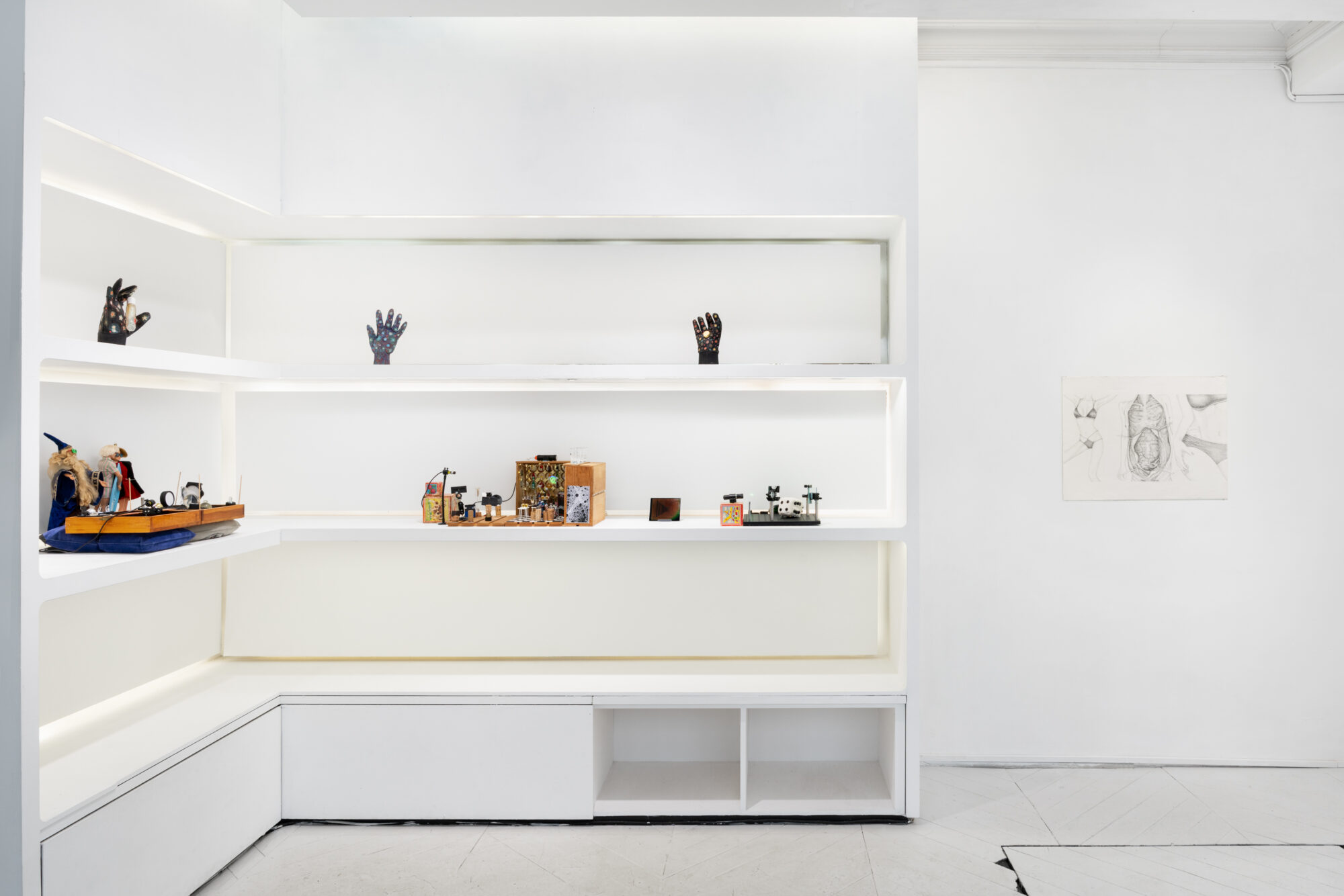
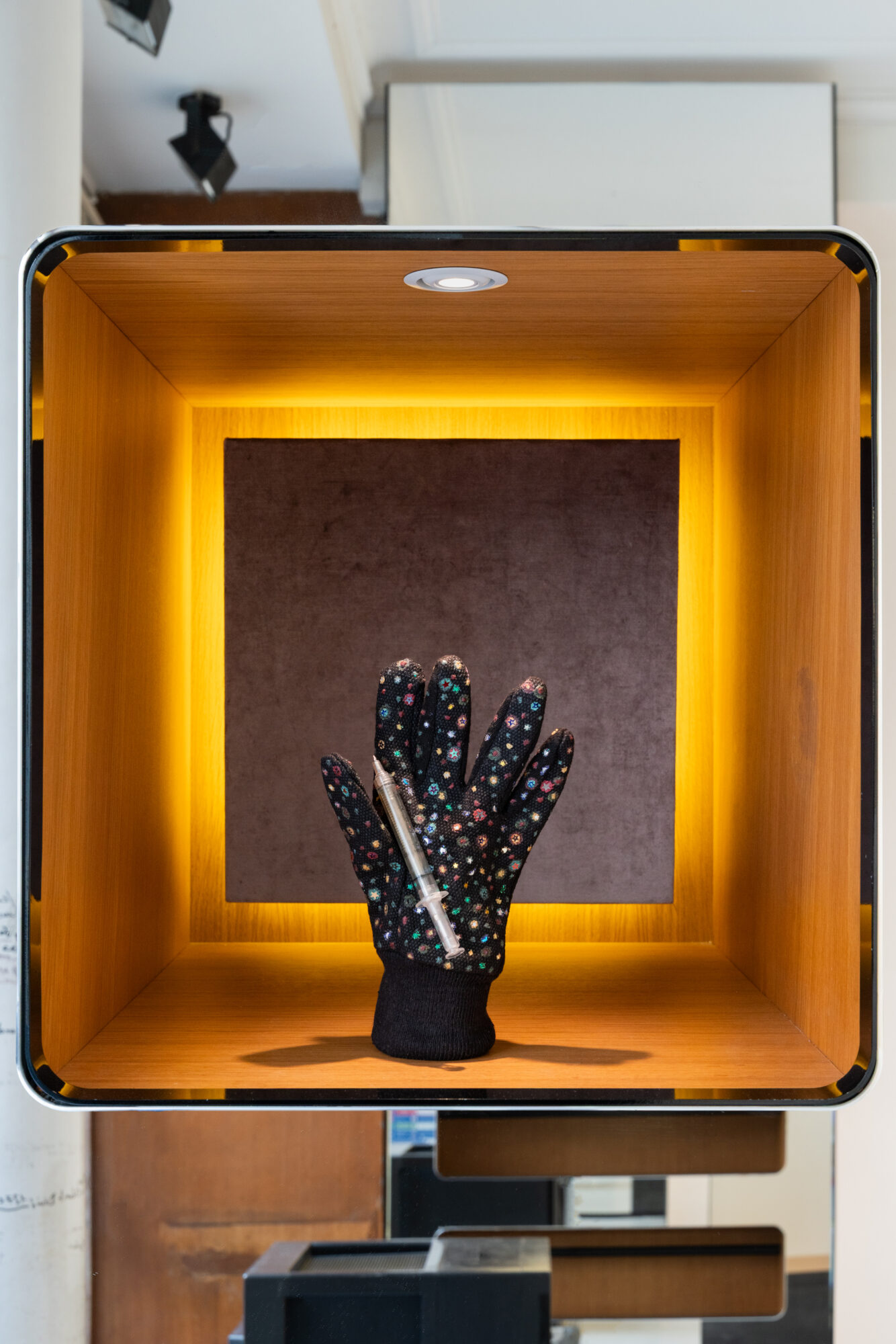
Although she always worked in distinct series, MacTavish’s enduring artistic investigations are best understood when her bodies of work are brought into dialogue. Made some thirty years after the conclusion of Self Centred, the graphite drawing Gray #5 (2007) deconstructs the female body (along with projected fantasies) by dissecting it. The video Heaven’s Door (2012) shows articles of cut-up blood-stained clothing — resembling shed skin — carefully laid out on the floor of MacTavish’s apartment following a cycling accident, which caused significant head trauma and left her with incapacitating flashbacks and persistent disorientation. As she recalls somewhat humorously, “I carried a compass. It was a struggle to find my way out of a public washroom. You don’t appreciate a sense of direction until you step out of a toilet cubicle, go the wrong way, bump into a wall and honestly feel stumped.” This mention of the exitless washroom echoes Self Centred’s orientationless images.
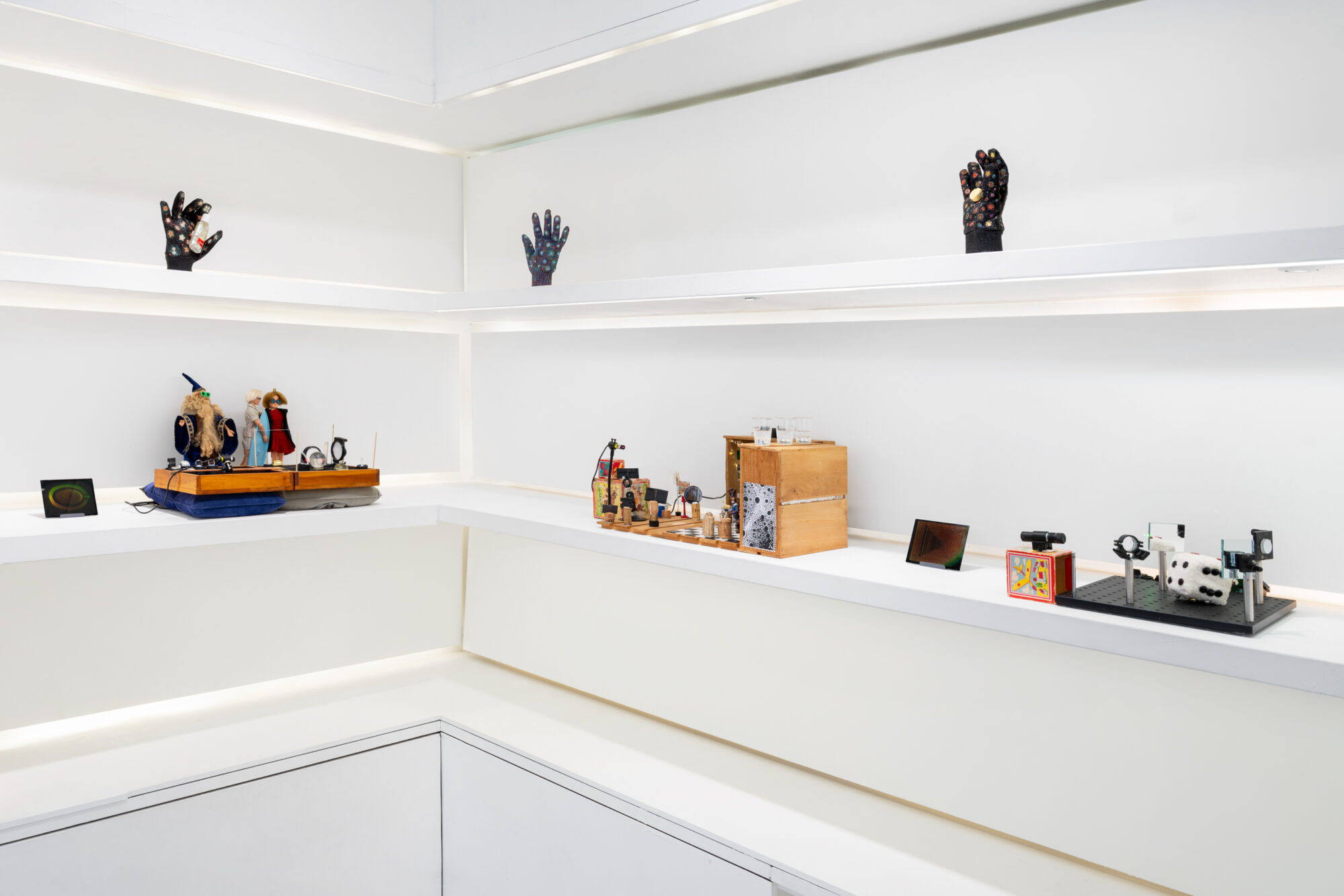
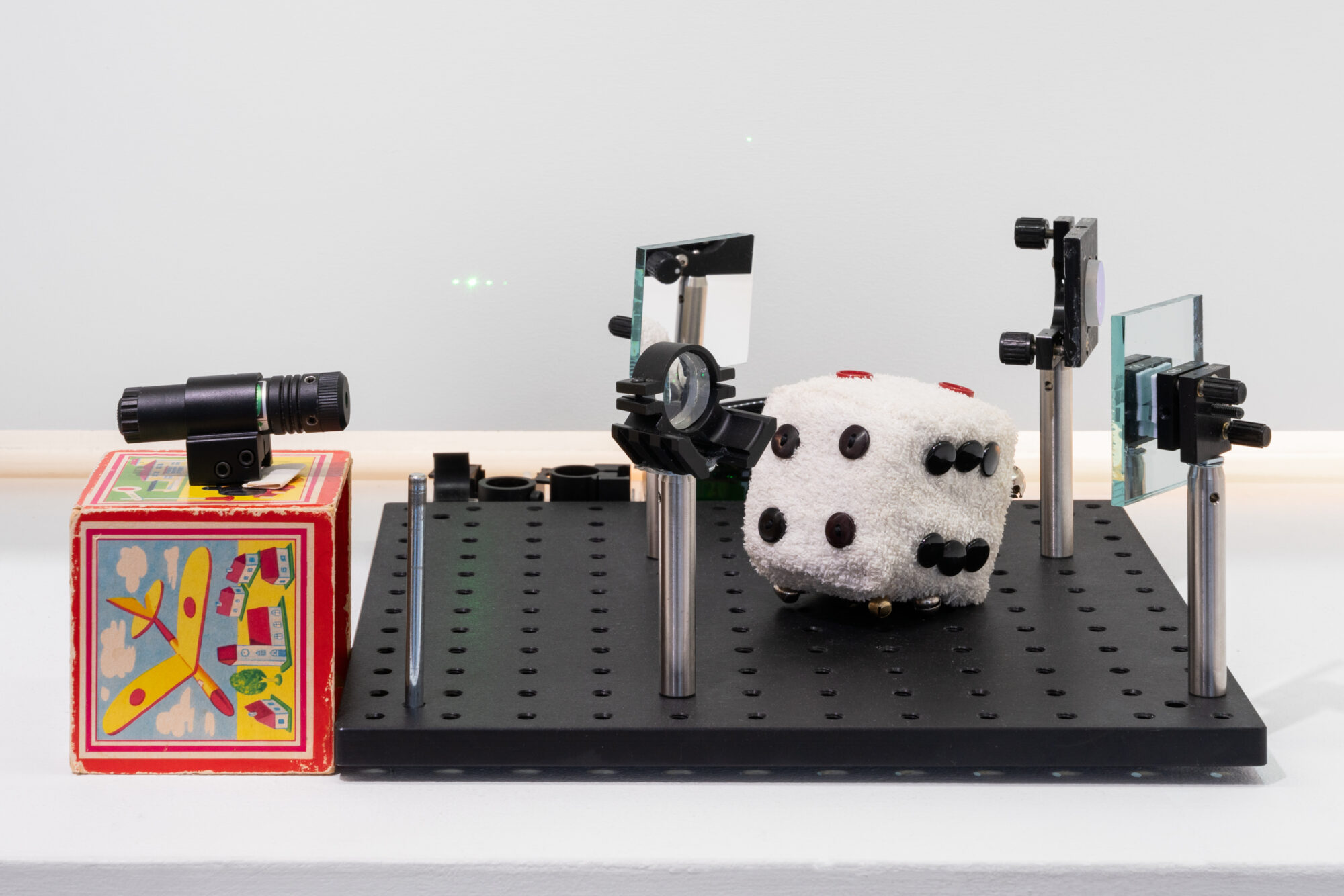
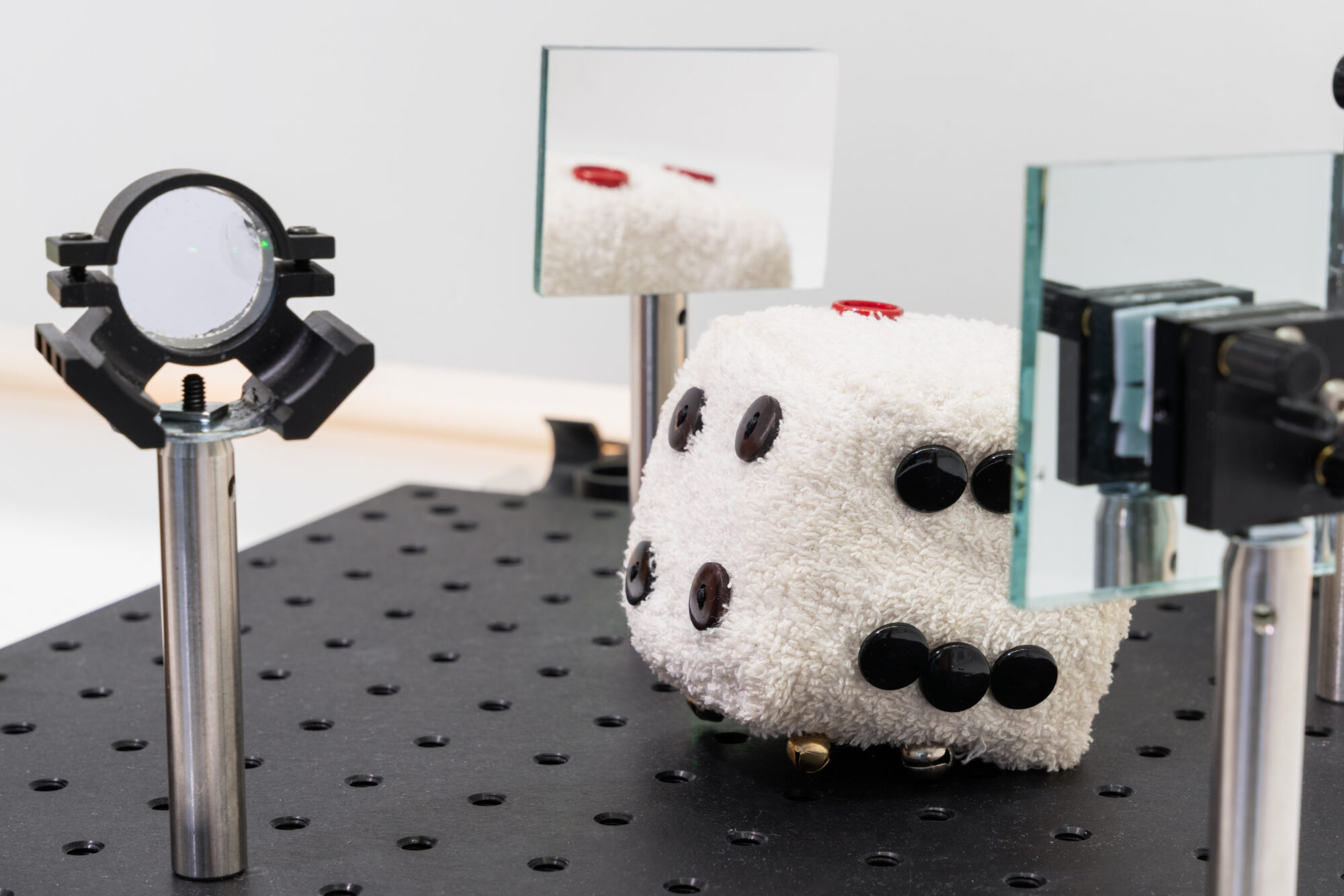
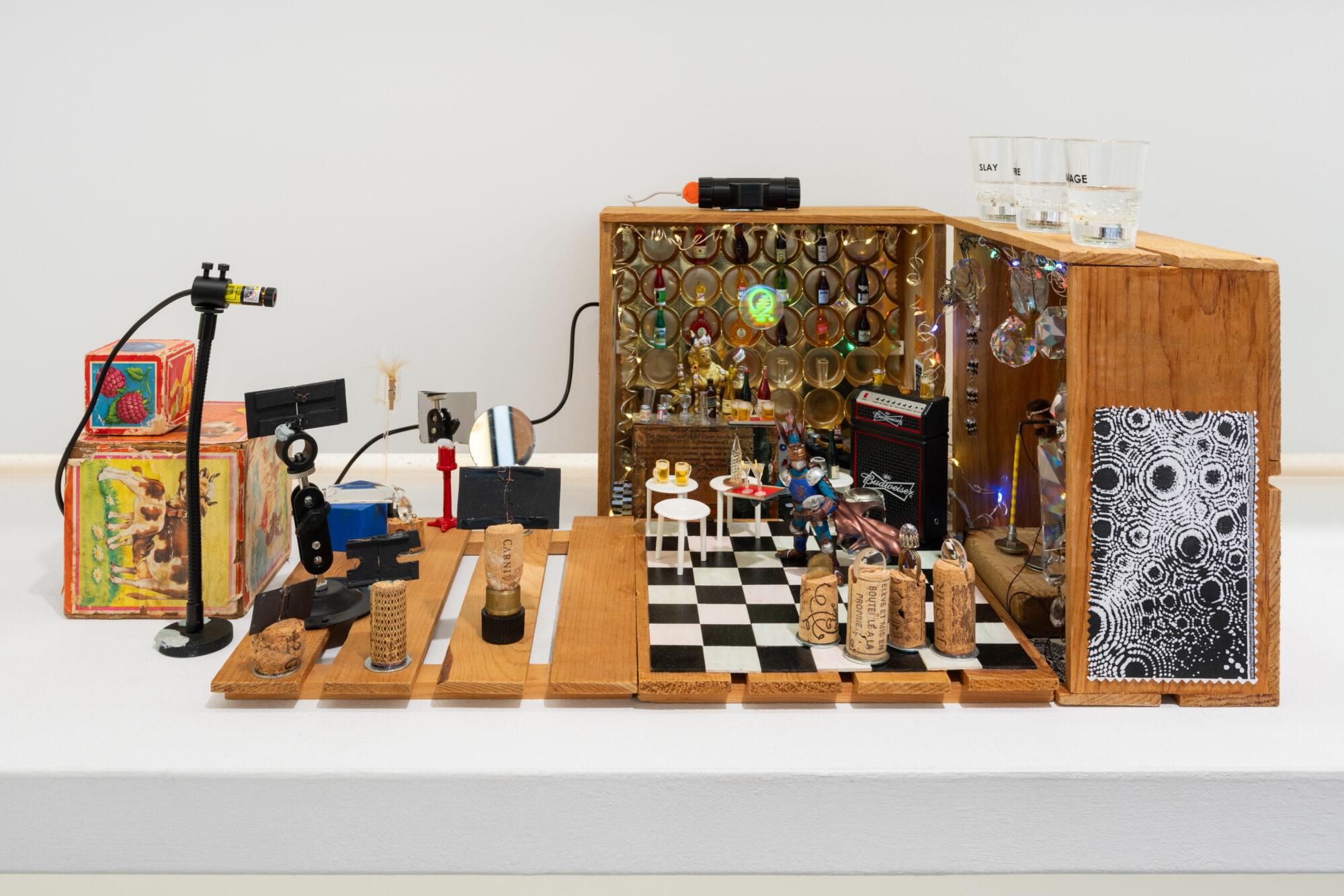
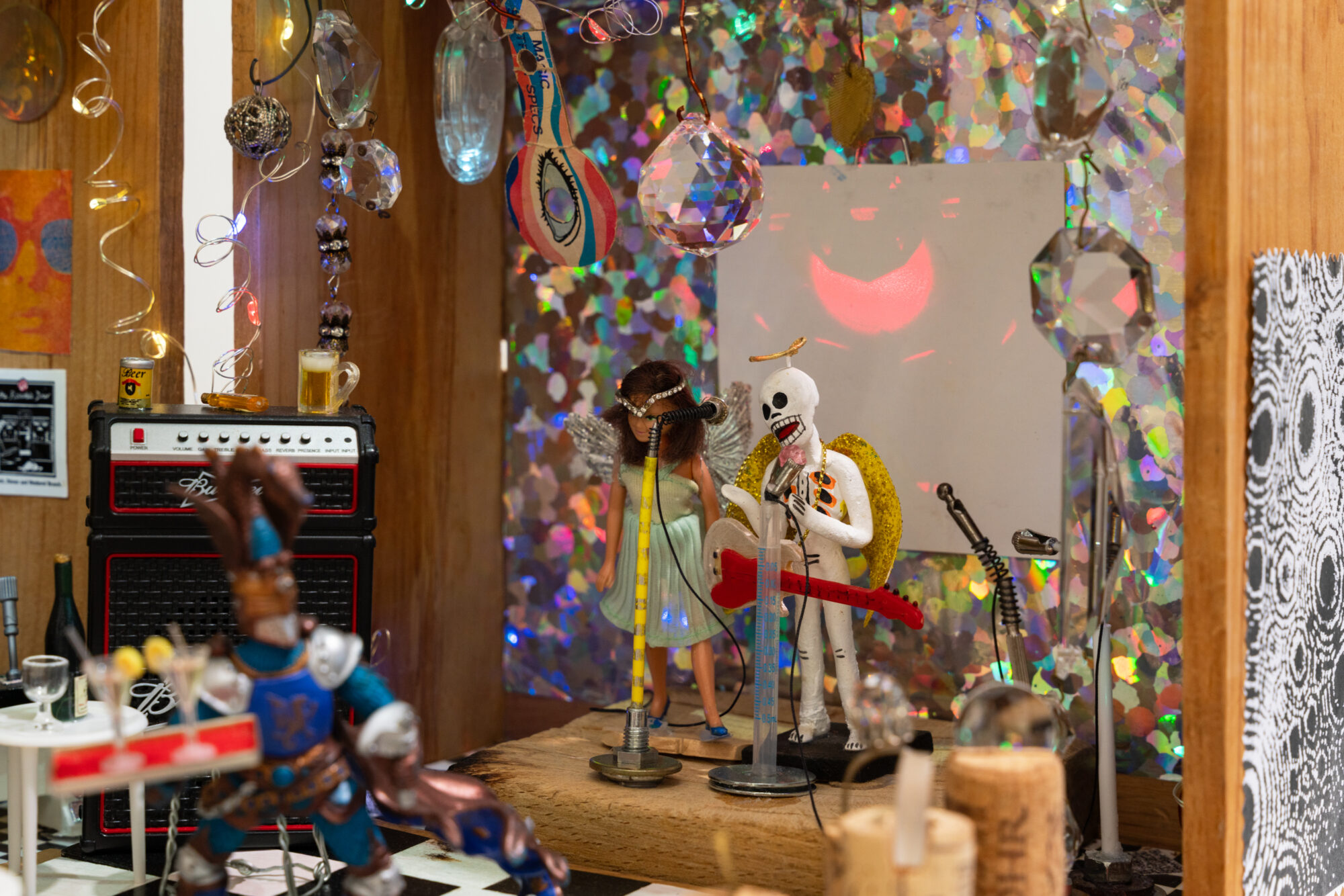
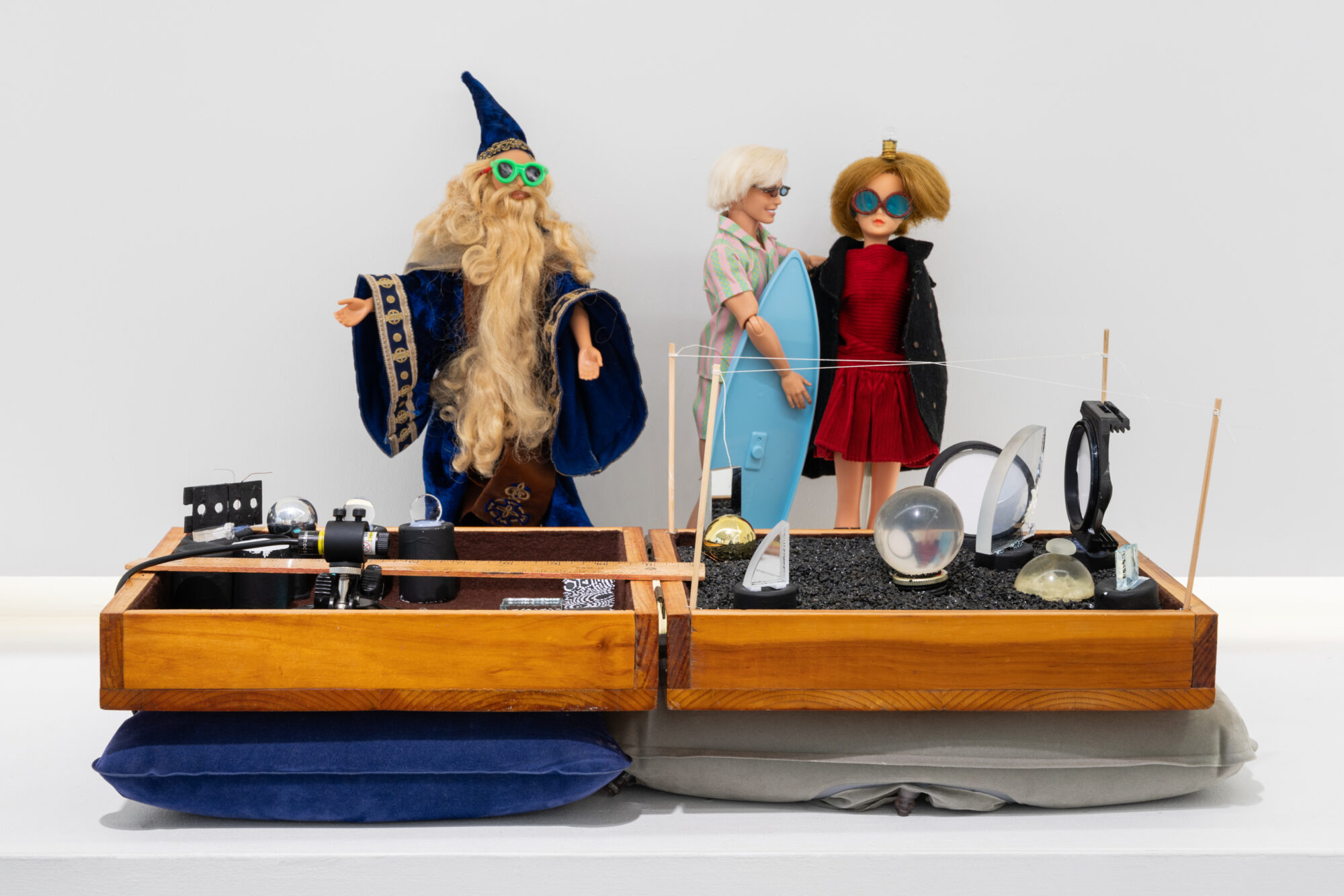
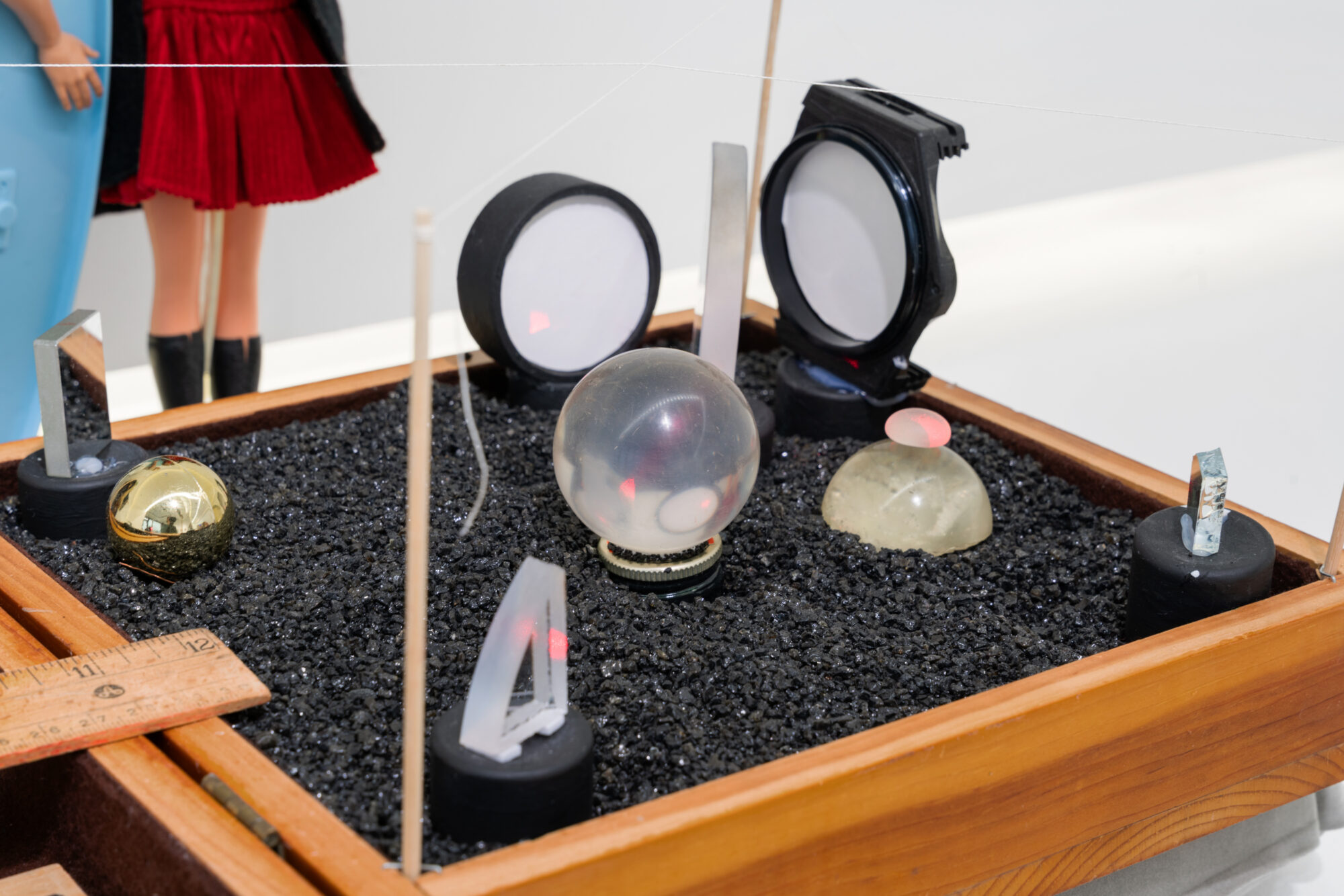
The artist’s myopia makes her left eye like a magnifying glass that, as she puts it, guides her fascination with the miniature. Since childhood, MacTavish has made and played with carefully arranged dollhouses complete with custom, scaled-down artworks. Specially made for the shelving of Shmorévaz, the Trippy Trix Tryptic (2026) dollhouses stage three scenes that reflect upon her transformative encounter with holography in the 1970s: a DIY-style holography sand table, a laser-light cabaret and a Mach–Zehnder interferometer, an experimental setup used to demonstrate the wave–particle duality of light.
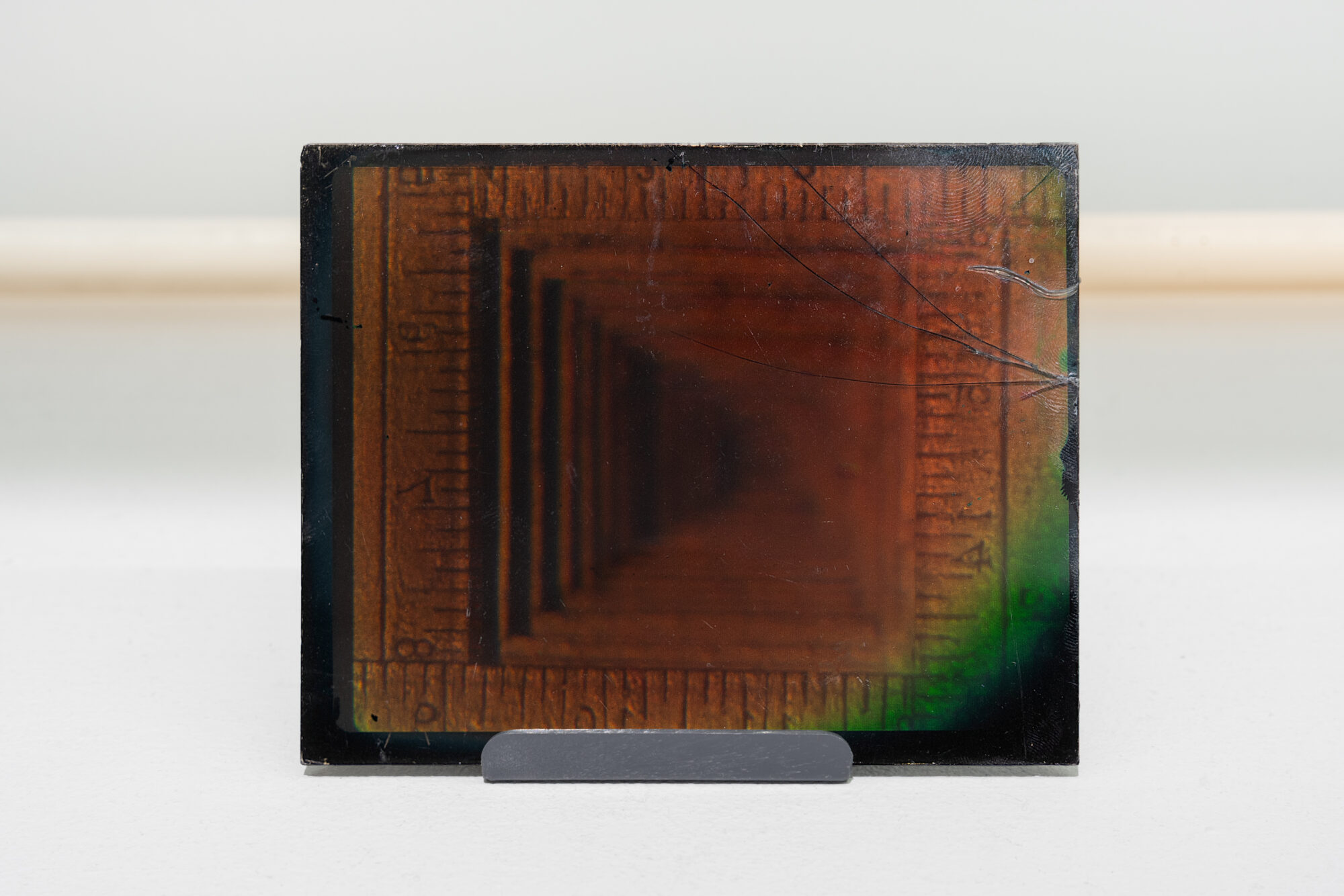
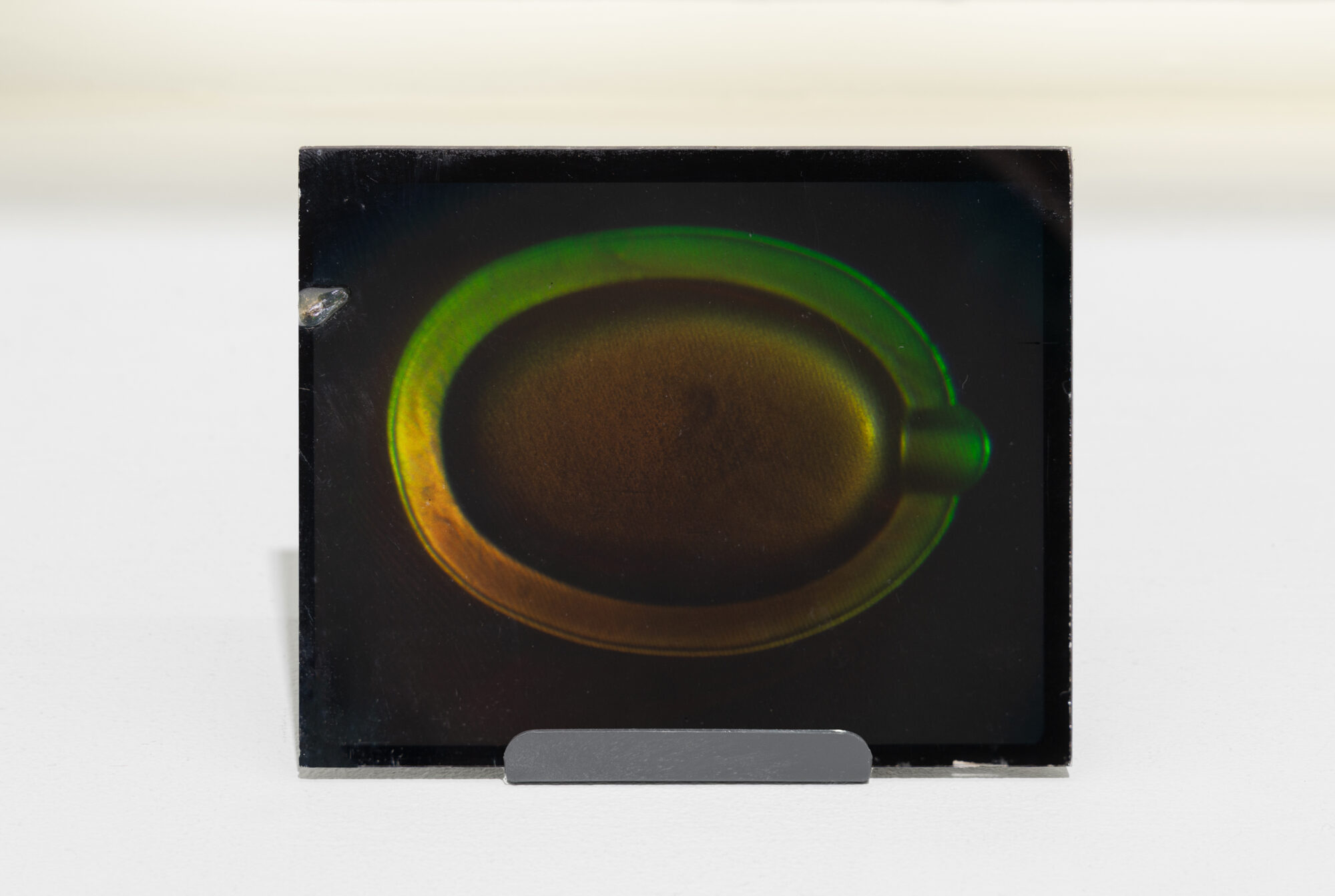
MacTavish shot her first hologram in 1973 by sneaking into a University of Toronto Physics Lab, in preppy disguise, thanks to the help of a student she met at a party. This encounter began a cross-continental pursuit of the fugitive medium, eventually ending up in Vancouver, Canada at artist Al Razutis’ holography and experimental media studio Visual Alchemy. It’s in this studio in 1974 that she collaborated with Razutis on a number of holograms, two of which, Ashtray and Ziggurat are featured in the exhibition, and also, where she made her first drawing in the Self Centred series. Central to the concept of holography is the idea that, even if you shatter or break a hologram, the fragments still show the whole of the original image.
Today, MacTavish is busy creating custom gold jewelry in collaboration with designer Linda Penwarden to be used as subjects for new holograms. Simultaneously exploring new mediums while returning to holography some fifty years later, is a testament to MacTavish’s prevailing curiosity. Her excitement for universal symmetries is infectious, while her patience with, and love of, laborious artistic processes is monumental. Her art is as much about survival as it is about mystery and joy — it is rarely profitable, never convenient, but always necessary. When describing difficult periods in her life, when art-making proved challenging, she concludes, “I tried to quit art as impractical, and when art did not quit me it affirmed what I suspected, that it does me more than I do it.”
– Felix Rapp
* * *
Catharine MacTavish (b.1952) is a Canadian artist living in Toronto. Although her vast and ongoing body of work is still relatively undiscovered, early drawings and paintings are included in the collections of the Art Gallery of Ontario, the Surrey Art Gallery and the Canada Council Art Bank, to name a few. MacTavish has had solo exhibitions at the Richmond Art Gallery, the U.B.C. Fine Arts Gallery, Gallery Stratford, Mercer Union and the Art Gallery of Greater Victoria. She holds a BFA from York University and an MA in Religion and Culture from Wilfrid Laurier University.
Felix Rapp (b. 1993) is a German-Canadian artist, curator and editor living on Pender Island in British Columbia, Canada. Rapp’s artistic and curatorial work stems from the transformative potential of experimental imaging processes, including darkroom printing, holography and the expanded communities that form around these activities. Rapp holds a BFA from Emily Carr University of Art + Design and an MFA from the Royal Academy of Fine Arts Antwerp. He is a co-founding member of the Vancouver artist-run space People as-well-as the co-founder and co-editor of Brussels/Vancouver-based magazine Le Chauffage.
***
Catharine MacTavish, High-Speed Eternity
curated by Salomé Burstein & Felix Rapp
with Emile Rubino & Deon Feng
from April 16 to May 23rd, 2026
With many thanks to Coach House Press, Alexis De Bonis, Hampus Lindwall, Michael Page, Al Razutis, Isabella Ritter & Su Schnee